Seedling training improves rural food security and community self-sufficiency
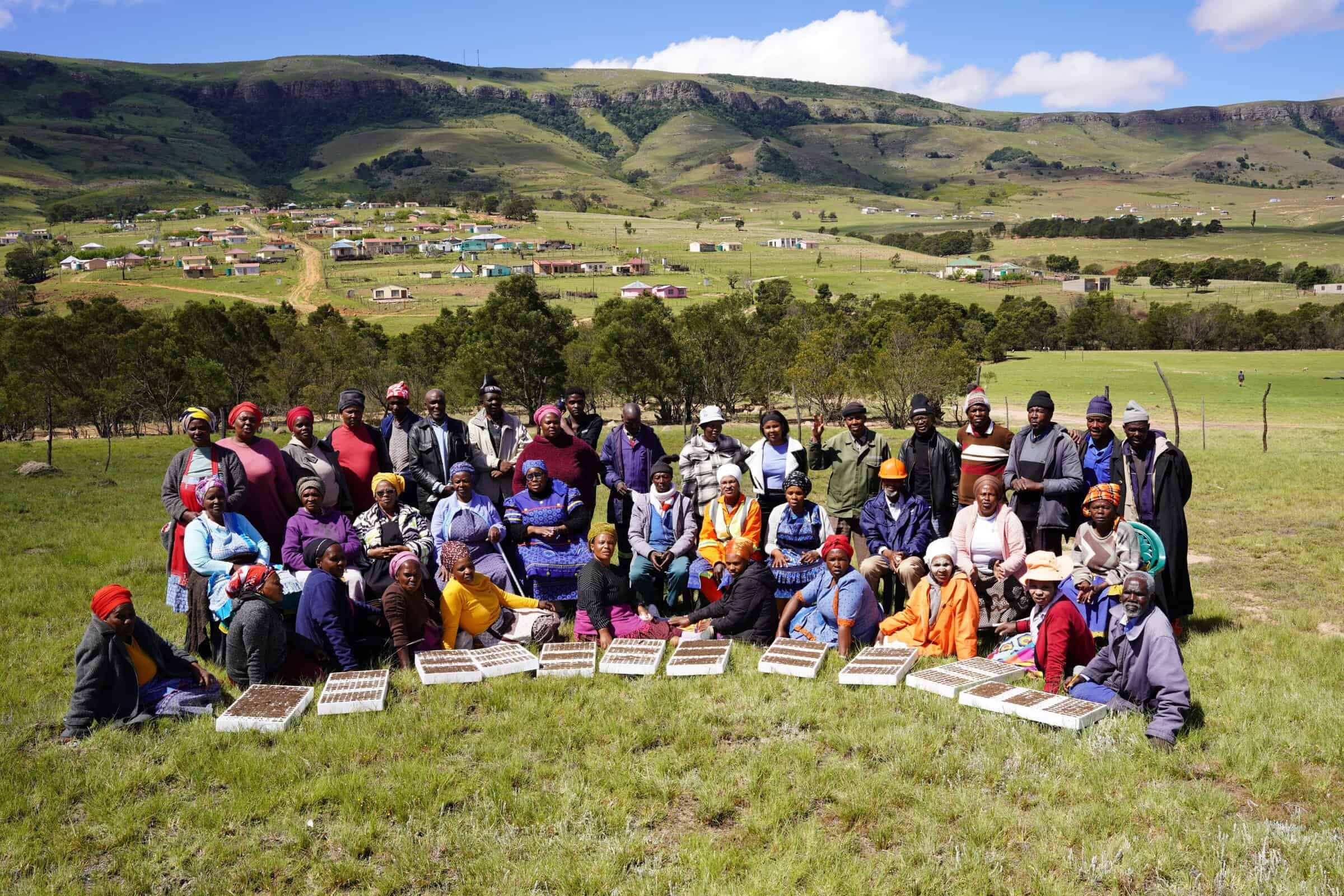
AfriForum and Saai this week joined forces with Nkosi Zweloxolo Stokwe and the Adopt-A-Village Rural Food Security Initiative to empower the Mtingwevu community near Cala in the Eastern Cape with the knowledge to grow seedlings for their vegetable gardens. Approximately 55 community members from 50 households attended the training, which was presented by Stark Ayres. The seedling trays used during the training were donated by Hygrotech. Nkosi Zweloxolo Stokwe is the traditional leader of the AmaQwathi cultural community.
This training follows after the Adopt-A-Village Rural Food Security Initiative approached AfriForum regarding possible collaboration. The initiative first became involved with the Mtingwevu community in 2022, when a package consisting of vegetable seedlings, fruit trees, maize seed, seed potatoes, a JoJo tank for rainwater harvesting, and gardening tools was handed over to the 50 households of the Lakheka Mtingwevu Agricultural Initiative as the first phase of their development project. The main objectives of the initiative are to revive household vegetable production, reduce dependency on government grants, develop holistic self-sufficiency and healthy eating habits, and foster discipline, commitment, and a strong work ethic. The outcomes the initiative wishes to achieve include food security and rural community development, skills development, poverty alleviation, and community health through nutritional awareness and organic farming methods.
“I am extremely proud of the Mtingwevu community members who are taking responsibility and working diligently to improve their own living conditions. I am deeply grateful that the Adopt-A-Village Rural Food Security Initiative, AfriForum, and Saai have joined us to equip our grassroots communities with knowledge and skills so that they can become more self-sufficient,” says Nkosi Zweloxolo Stokwe.
“As members of the Lakheka Mtingwevu Agricultural Initiative, we are satisfied with what we have already achieved since 2022. We have become more resilient, resourceful, patient and consistent. We are grateful for the support of all the role-players. The training we have received will enable us to progress much faster. It creates opportunities for hardworking community members with potential to earn an income by selling seedlings to fellow community members and to neighbouring communities. It is heartening to know that we are contributing to ensuring that nutritious food – especially for pregnant women and children – is available,” says Nokhayalethu Daliwe, chairperson of the Lakheka Mtingwevu Agricultural Initiative.
“The Eastern Cape has tremendous agricultural potential that can be unlocked to improve food security and to develop emerging farmers who have the potential into fully fledged commercial farmers. That is why it is important for Saai to be involved in this initiative – to support family farmers and thereby contribute to food security and wealth creation at grassroots level,” says Dr Theo de Jager, executive chairperson of Saai.
“The different cultural communities in our beautiful country can all learn from one another – the reality is that we need one another to create a bright future for everyone in the country. It is a privilege for AfriForum to build good relations and cooperation between Afrikaners and other cultural communities on the basis of mutual recognition and respect. Our collaboration focuses on strengthening community self-sufficiency and restoring a healthy cultural self-image, because both are essential for communities to reach their full potential. We are grateful to our members and the sponsors, Stark Ayres and Hygrotech, for making it possible for us to make a positive difference where it matters most – in the lives of people at grassroots level,” says Nantes Kelder, National Project Coordinator for Intercultural Relations and Cooperation at AfriForum.